
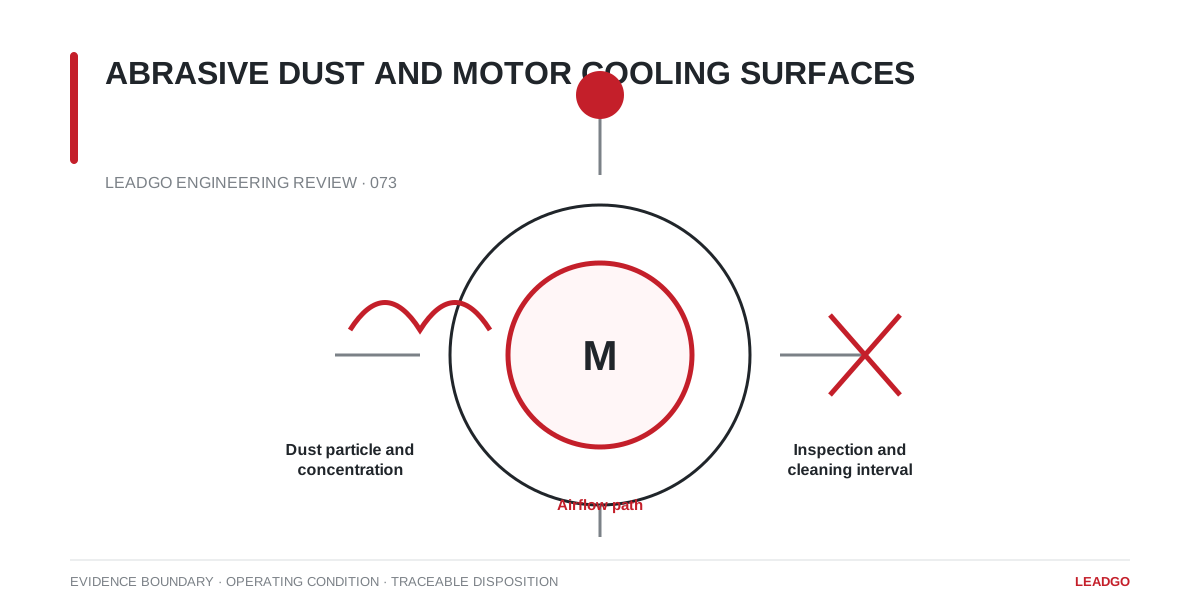
Abrasive dust creates three different maintenance problems: it can blanket heat-transfer surfaces, wear fan and cooler components, or enter through a damaged interface. A useful inspection identifies which mechanism is present instead of recording only that the motor is dusty.
| Finding | Likely concern | Evidence to collect | Immediate decision |
|---|---|---|---|
| Packed fins or blocked fan-cover openings | Reduced external cooling | Photos, load, winding/bearing temperatures | Clean safely and compare temperatures at similar load |
| Polished, thinned or chipped fan surfaces | Erosion or imbalance risk | Close-up photos, clearance and vibration trend | Inspect the complete fan assembly before return to service |
| Dust tracks at joints, glands or drains | Possible ingress path | Enclosure condition and internal inspection where permitted | Repair the interface; do not rely on external cleaning |
| Rapid buildup after cleaning | Source-control or interval problem | Time-stamped inspection history | Review shielding, airflow direction and cleaning interval |
Build a repeatable inspection
Photograph the same locations from the same angle. Record load and ambient conditions with temperature or vibration readings so later comparisons are meaningful. Cleaning methods must not force contamination through seals, damage coatings or bend cooling fins.
Where deposits recur, agree an observable trigger for cleaning rather than using a calendar alone. The trigger may be visible blockage at defined locations or a temperature change under comparable duty; its acceptance value must come from the motor documentation and site reliability practice.
Related reading: what TEFC actually means and motor derating for ambient conditions.