
YE4 (IE4)
YE4 (IE4) Series Three-Phase Induction Motor
Same frames, same mounting and same duty envelope as YE3, one efficiency class higher — IE4 under IEC 60034-30-1, grade 2 under GB 18613—2020.
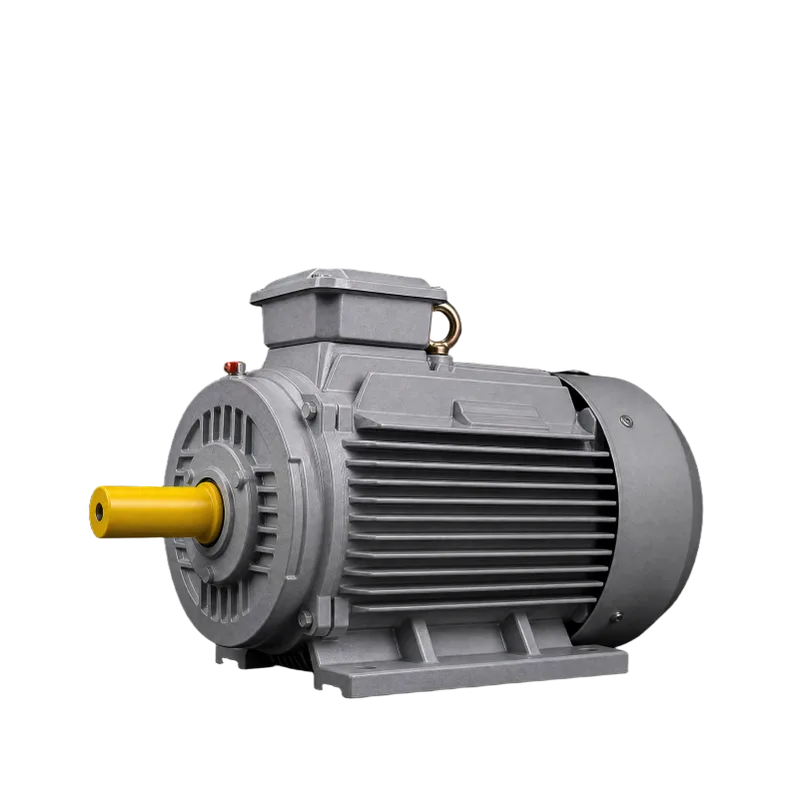
YE4 is a single-speed, totally enclosed, fan-cooled, continuous-duty low-voltage squirrel-cage induction motor for general industrial use. It reaches grade 2 of GB 18613—2020, corresponding to IE4 in IEC 60034-30-1.
Because the frame and mounting dimensions match YE3, YE4 is normally specified as a straight efficiency upgrade on an existing installation rather than as a redesign.
Core specifications
| Parameter | Value |
|---|---|
| Frame size | H80 – H355 mm |
| Power range | 0.55 – 375 kW |
| Poles | 2 / 4 / 6 / 8 |
| Voltage & frequency | 380 V, 50 Hz (custom on request) |
| Efficiency class | IE4 · GB 18613—2020 grade 2 |
| Protection degree | IP55 |
| Thermal class | 155 (F), assessed to class B rise |
| Cooling | IC411 |
| Mounting | B3 / B5 / B35 |
Standards and certification
- GB 18613—2020 grade 2
- IEC 60034-30-1 IE4
Typical applications
- Machine tools, fans, compressors, conveyors, mixers
- Printing machinery, agricultural machinery, packaging machinery
- High-running-hours general drives where the efficiency premium pays back
Selection guide
FAQ
Downloads
Certificates and test reports are issued against the specific model and rating rather than the series, so we send the ones that apply to your order. Tell us the rating and the market and we will send them.
Related products
Technical articles on this series
Approved Motor Drawing Review Before Manufacture
ReadB3 vs B5 vs B35 vs V1 Motor Mountings: Dimensions and Selection
ReadBelt Drive Sheave Alignment and Motor Overhung Load
ReadBelt Tension and Motor Bearing Life
ReadWhy a Centrifugal Fan Can Overload Its Motor
ReadCentrifugal Pump Motor Margin Without Blanket Oversizing
ReadCompressor Unloader and Motor Starting Sequence
ReadContainer Humidity During Motor Shipment
ReadConveyor Motor Selection: Breakaway Torque and Restart
ReadCrusher Jam Restart: Motor and Drive Questions
ReadElectric Motor RFQ Checklist: What Buyers Should Specify
ReadClass F Insulation, Class B Rise: What It Buys
ReadFan Motor Acceleration: Inertia Matters More Than Running kW
ReadFixed and Floating Bearings in Electric Motors
ReadGB 18613 and IE Classes: Reading a Chinese Efficiency Grade
ReadGB 18613, IEC IE and NEMA MG 1: How to Compare
ReadHigh No-Load Current in an Induction Motor
ReadHow to Read a Motor Performance Curve: Current, Efficiency and Torque
ReadIE3 vs IE4 vs IE5: A Project-Lifecycle Selection Framework
ReadIEC 60034-2-1 vs IEEE 112 Efficiency Tests
ReadCoupling Selection for Industrial Motor Drives
ReadIndustrial Motor Data Sheet Review: Fields That Must Agree
ReadExport Packaging and Storage for Industrial Motors
ReadKiln Inching Drive Design: Torque Path, Brake and Interlocks
ReadHow to Use Locked-Rotor Current Data
ReadLocked-Rotor and Stall Protection for Industrial Motors
ReadCoastal Motor Specification: Salt, Condensation and Corrosion Control
ReadSelecting Motors for Mining Crushers and Ball Mills
ReadMixer Motor Sizing for Changing Viscosity and Batch Starts
ReadMotor Acceleration Time and Stall Time Must Be Checked Together
ReadMotor Drain Plugs and Condensation Management
ReadMotor Baseplate Flatness: Measurement and Acceptance
ReadMotor Bearing Internal Clearance: When C3 Is Not a Default
ReadMotor Bearing Selection: Ball, Roller and Insulated Types
ReadMotor Bearing Storage and Handling: Receiving-to-Assembly Controls
ReadMotor Bearing Temperature Alarm and Trip Settings
ReadMotor Feeder Voltage Drop During Running
ReadMotor Cable Terminations: Electrical Fit and Mechanical Stress
ReadMotor Code Letters and Locked-Rotor Starting Current
ReadMotor Commissioning Baseline Data Worth Keeping
ReadMotor Cooling Air Recirculation at Site
ReadMotor Cooling Method IC Codes: What Buyers Need to Confirm
ReadMotor Core Loss Testing Before and After Rewind
ReadMotor Current Signature Analysis: Useful Boundaries
ReadMotor Derating for Altitude and Ambient Temperature
ReadMotor Direction Reversal: Electrical and Mechanical Checks
ReadMotor Duty Profile: What to Define Before Selection
ReadMotor Earth-Fault Protection: Settings Need a System Study
ReadMotor Efficiency at Partial Load: Beyond the Nameplate Value
ReadMotor Factory Acceptance Test Checklist
ReadMotor Factory Test Witness Plan: Hold, Witness and Review Points
ReadMotor Fan Rotation and Cooling Airflow Checks
ReadMotor Foundation and Grouting Inspection Checklist
ReadMotor Frame Size vs Power Rating: What the Number Really Means
ReadMotor Grease Quantity per Bearing: What Must Be Defined
ReadMotor Grease and Relubrication Intervals
ReadMotor Grounding and Earthing: Installation Checklist
ReadHigh-Potential Testing: What a Pass Result Does Not Prove
ReadMotor Insulation Resistance After Cleaning or Washdown
ReadMotor Load Test at Site: Build a Process Baseline
ReadMotor Losses Explained: Copper, Core, Mechanical and Stray Load
ReadMotor Bearing Grease Compatibility: A Safe Changeover Checklist
ReadMotor Manufacturing Tolerances: What Can Vary?
ReadMotor Nameplate Data and Document Control
ReadMotor Nameplate Photos to Request Before Replacement
ReadMotor No-Load Run Test: A Practical Checklist
ReadMotor Noise Limits: How to Specify and Verify Them
ReadMotor Overload: Process, Mechanical or Electrical?
ReadMotor Overload Trip Class: Match Starting Time and Thermal Risk
ReadMotor Paint Damage and Field Corrosion Repair
ReadWhy Motor Power Factor Falls at Light Load
ReadMotor Preservation When Commissioning Moves by Months
ReadMotor Protection CT Selection: Ratio, Burden and Saturation
ReadReplacement Motor Shaft Height: Base and Alignment Review
ReadMotor Restart After a Power Dip: Residual Speed and Process Risk
ReadMotor Rewind vs Replace: A Decision Framework
ReadMotor Rotation Bump Test: Scope, Readiness and Safety
ReadMotor Shaft Alignment: What to Record Before Startup
ReadMotor Shaft Dimensions and Coupling Fit
ReadMotor Shaft Key and Keyway Fit: Avoiding Fretting
ReadMotor Receiving Inspection: Find Shipping Damage Early
ReadMotor Space Heater Control Logic: Interlocks, Alarms and Commissioning
ReadDOL, Star-Delta, Soft Starter or VFD: Which Start Method?
ReadMotor Starting Voltage Drop: A Review That Includes the Load
ReadMotor Feeder Fault Level: Check the Complete Equipment Interface
ReadMotor Terminal Box Position and Cable Entry Planning
ReadHow to Document Motor Torque Margin
ReadHow to Read a Motor Torque-Speed Curve
ReadMotor Total Cost of Ownership: A Worksheet Buyers Can Audit
ReadVCI Packaging for Industrial Motors: Define the Preservation System
ReadMotor Visual Inspection: Acceptance Record and Punch-List Closeout
ReadMotor Voltage and Frequency Tolerance: Project Review
ReadVoltage Unbalance: How a Small Supply Error Overheats a Motor
ReadMotor Winding Resistance: When a Phase Difference Matters
ReadPTC Thermistors vs RTDs for Motor Temperature Protection
ReadPump Affinity Laws and Motor Power
ReadPump Cavitation vs Motor Failure
ReadPump Minimum Flow and Motor Load
ReadReciprocating Compressor Motors: Loaded vs Unloaded Start
ReadReplacement Motor Interchangeability Checklist
ReadResonance, Unbalance or Misalignment? Follow the Evidence
ReadSelecting Motors for a Steel Rolling Mill Line
ReadRotor Balancing Grades: When Tighter Is Necessary
ReadSite Acceptance Testing for Industrial Motors
ReadSoft Foot in Motor Installations: Checks Before Alignment
ReadSpare Motor Storage and Periodic Inspection
ReadSurge Comparison Testing for Motor Windings
ReadSynchronous Speed Formula, Slip and Rated Speed
ReadThermal Overload Relay Settings: Protect the Motor, Not a Number
ReadTransformer Capacity for Large Motor Starting: A Voltage-Drop Study
ReadVariable-Torque vs Constant-Torque Loads
ReadHow to Verify a Motor Test Report Matches the Order
ReadAxial Thrust in Vertical Motor Applications
ReadVertical Pump Motor Selection: Thrust, Flange and Shaft Checks
ReadWhat Is an Induction Motor? How It Works, Slip and Selection
ReadTEFC vs IP Rating, IC416 and Explosion-Proof Motors
ReadRequest a quote — YE4 (IE4)
Tell us the rating, quantity and application and an engineer will come back with a specification, the documents for that model, and a price.
Contact Sales