
Bearing internal clearance must be chosen after considering fit and operating temperature because the installed running clearance differs from the catalogue clearance. Selecting C3 by habit can be as misleading as selecting normal clearance by habit; the correct answer depends on how the rings are fitted and heated in service.
Fix the duty before choosing a feature
A useful review begins with the driven equipment, the supply and control arrangement, the mechanical interface and the site condition. Review the exact bearing designation, shaft and housing fits, temperature distribution, speed, load direction and lubrication method. If one of those inputs is still open, mark it as an assumption instead of hiding it inside a general note.
This matters because the motor is only one part of the drive train. The equipment owner defines the duty and acceptance criteria; the motor supplier confirms what the offered design can deliver. Keeping those responsibilities separate makes technical questions easier to close.
The minimum technical review
| Step | Review point | Why it matters |
|---|---|---|
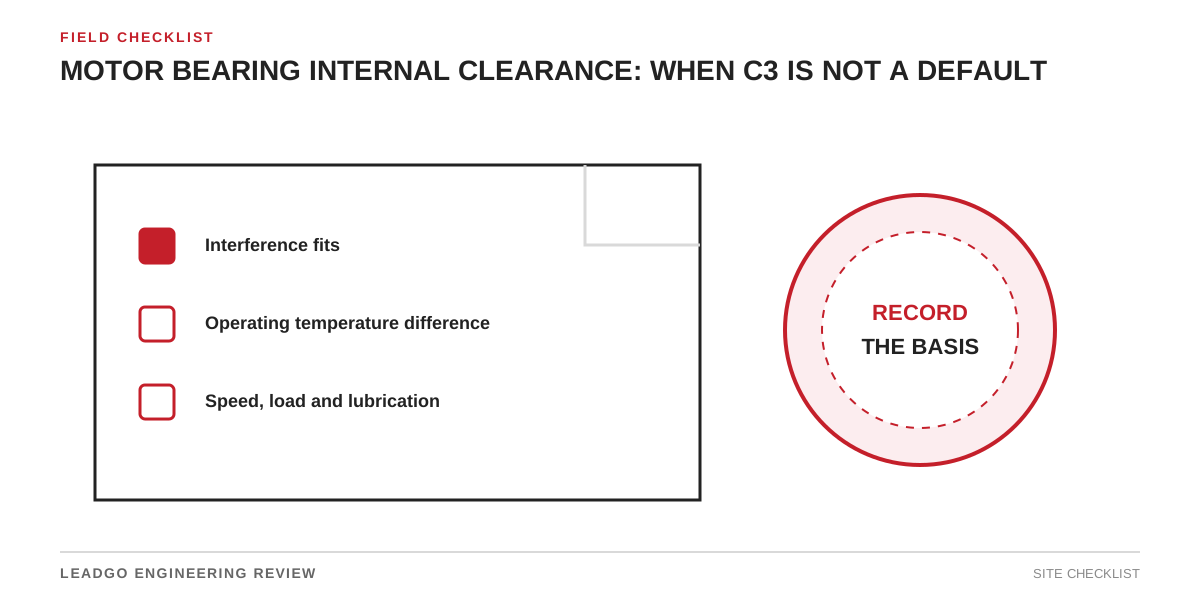
| 1 | Interference fits | Identify which ring is tight on its seat and how much internal clearance may be reduced during assembly. |
| 2 | Operating temperature difference | Consider the relative temperatures of inner ring, outer ring, shaft and housing at the intended duty. |
| 3 | Speed, load and lubrication | Confirm that the remaining running clearance supports the bearing type, speed and lubricant regime. |
Typical failure paths
- Copying clearance from another frame. Different fits, cooling and loads can make the installed condition materially different.
- Judging only by cold hand feel. Cold rotational feel does not quantify running clearance at operating temperature.
Information the supplier needs
The approval record should be short enough to use and detailed enough to audit. Keep the following items with the decision:
- bearing designation and manufacturer selection basis
- shaft and housing fit tolerances
- temperature and lubrication assumptions used in the review
Where a limit comes from the manufacturer, request confirmation for the exact motor and revision. Where it comes from the plant or driven equipment, identify the responsible engineering owner. Photographs and field measurements are useful supporting evidence, but they should not replace a controlled drawing or test record.
Decision rule
Bearing internal clearance must be chosen after considering fit and operating temperature because the installed running clearance differs from the catalogue clearance. Apply that rule to the complete operating envelope, not only the rated point. If the required evidence is missing, leave the item open and name what must be supplied before manufacture, shipment or energisation.