
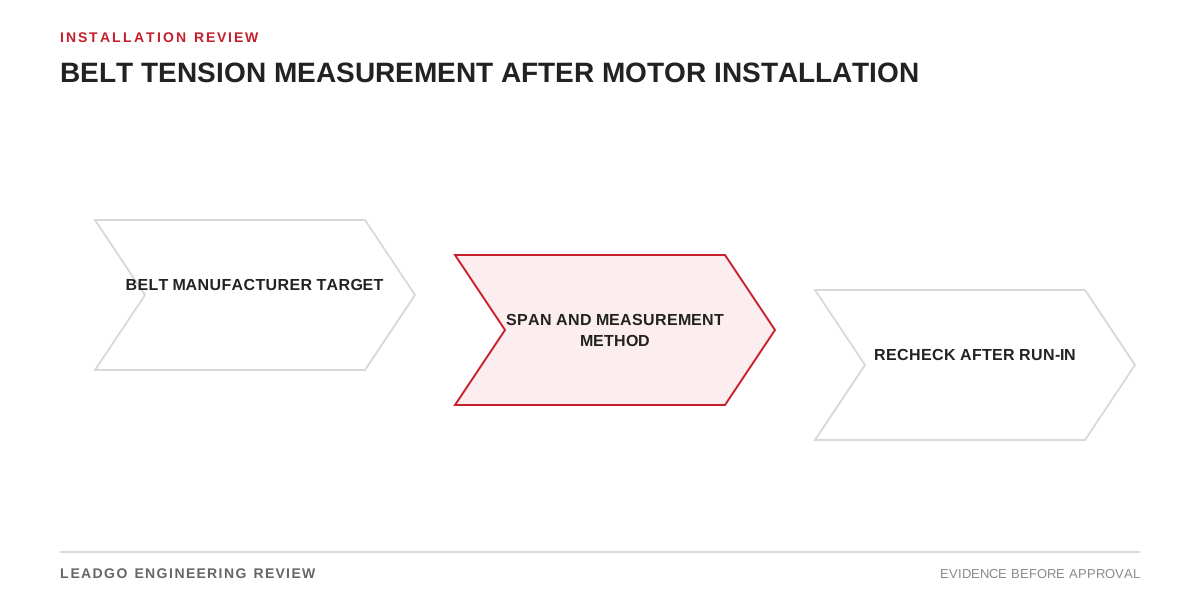
A belt can run quietly while applying excessive load to the motor bearings, or appear tight while slipping under duty. Installation acceptance therefore needs a measured value and the geometry behind it.
| Record | Why it matters | Acceptance source |
|---|---|---|
| Belt type and matched set | Identifies the correct method and target | Belt supplier |
| Pulley diameters and centre distance | Defines installed geometry | Approved drive drawing |
| Free span and measurement point | Makes the reading repeatable | Installation procedure |
| Deflection force or frequency result | Provides the measured condition | Belt supplier method |
| Resulting shaft load | Protects motor and driven equipment | Equipment limits |
Measure, align and recheck
Isolate the drive, inspect pulley grooves and establish alignment before setting final tension. Move the motor without creating soft foot, then tighten hold-downs and repeat both alignment and tension measurements. Record the instrument and final motor position.
After the prescribed run-in condition, inspect for dust, glazing and abnormal bearing temperature, and repeat the same measurement. Do not increase tension simply to suppress vibration or noise; identify the source first.
Related reading: belt-drive sheave alignment and overhung load and motor mounting arrangements.