
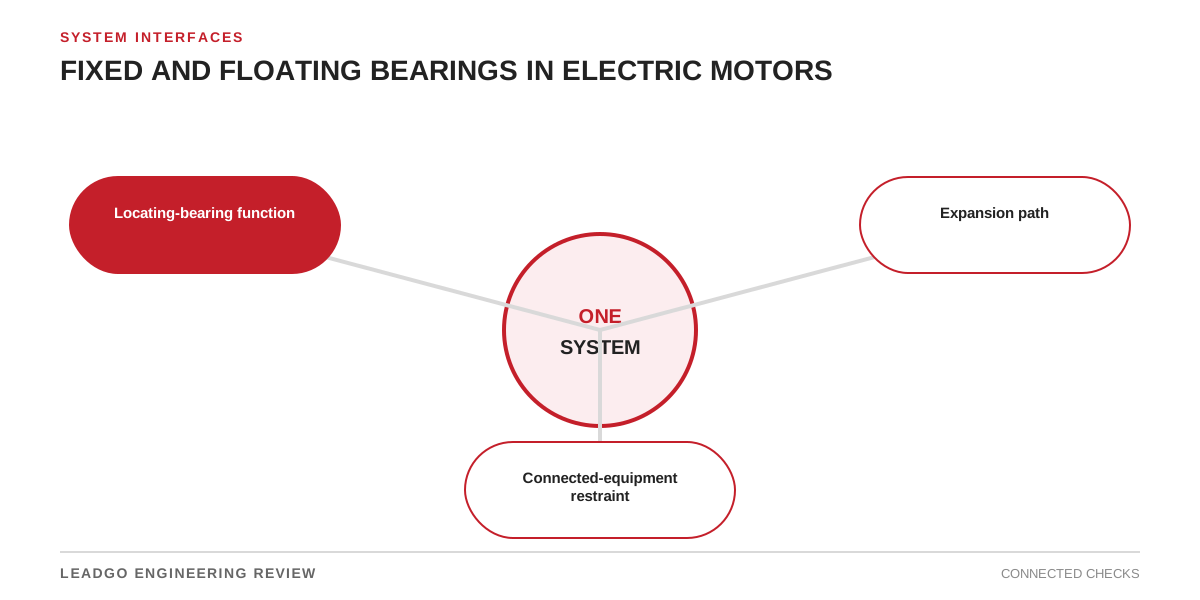
A motor bearing arrangement needs one defined axial locating function and a clear path for thermal expansion without unintended preload. Confusion often appears when both bearings, or the motor and driven equipment together, are treated as axial locating points.
Define the operating boundary first
A useful review begins with the driven equipment, the supply and control arrangement, the mechanical interface and the site condition. Trace axial location from the rotor through bearings, housings, coupling and driven shaft for cold and operating conditions. If one of those inputs is still open, mark it as an assumption instead of hiding it inside a general note.
This matters because the motor is only one part of the drive train. The equipment owner defines the duty and acceptance criteria; the motor supplier confirms what the offered design can deliver. Keeping those responsibilities separate makes technical questions easier to close.
Three checks that change the answer
| Step | Review point | Why it matters |
|---|---|---|
| 1 | Locating-bearing function | Identify which bearing and housing features establish the rotor axial position and in which directions. |
| 2 | Expansion path | Confirm where shaft and housing growth can be absorbed without loading the bearing or coupling. |
| 3 | Connected-equipment restraint | Review coupling type and driven-equipment thrust arrangement so two systems do not fight each other. |
Where reviews commonly go wrong
- Clamping both bearing positions axially. Thermal growth can become unintended bearing preload when no floating path remains.
- Ignoring coupling axial force. A coupling that transmits or reacts axial load can change the intended bearing function.
What to record before approval
The approval record should be short enough to use and detailed enough to audit. Keep the following items with the decision:
- motor bearing-arrangement drawing
- coupling axial-movement data
- driven-equipment thrust and thermal-growth information
Where a limit comes from the manufacturer, request confirmation for the exact motor and revision. Where it comes from the plant or driven equipment, identify the responsible engineering owner. Photographs and field measurements are useful supporting evidence, but they should not replace a controlled drawing or test record.
Decision rule
A motor bearing arrangement needs one defined axial locating function and a clear path for thermal expansion without unintended preload. Apply that rule to the complete operating envelope, not only the rated point. If the required evidence is missing, leave the item open and name what must be supplied before manufacture, shipment or energisation.