
Vertical motor selection must state who carries steady, transient and reverse axial thrust; mounting position alone does not define bearing responsibility. Pump hydraulics, shaft weight, start and stop events and abnormal flow can place different axial loads on the motor and driven equipment.
Start with the actual machine and site
A useful review begins with the driven equipment, the supply and control arrangement, the mechanical interface and the site condition. Separate continuous thrust, transient thrust, reverse thrust and rotor weight, then assign each load to a defined bearing system. If one of those inputs is still open, mark it as an assumption instead of hiding it inside a general note.
This matters because the motor is only one part of the drive train. The equipment owner defines the duty and acceptance criteria; the motor supplier confirms what the offered design can deliver. Keeping those responsibilities separate makes technical questions easier to close.
Evidence to collect
| Step | Review point | Why it matters |
|---|---|---|
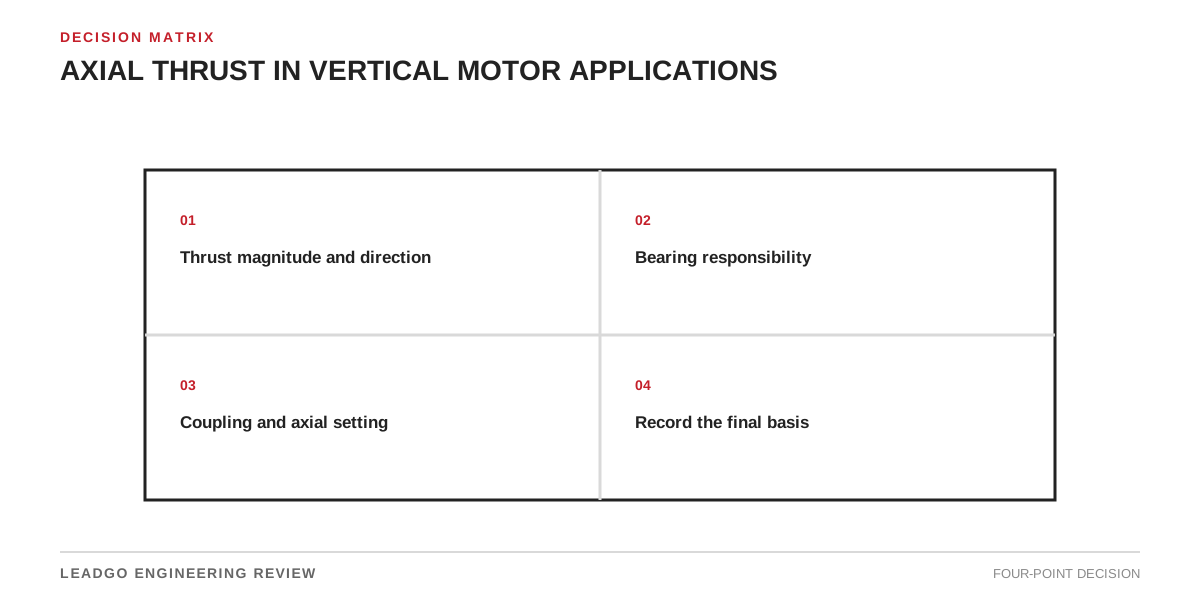
| 1 | Thrust magnitude and direction | Provide upward and downward values for rated, starting, stopping and abnormal conditions. |
| 2 | Bearing responsibility | State whether thrust is carried by the motor, pump, separate thrust bearing or a shared arrangement. |
| 3 | Coupling and axial setting | Confirm shaft end-play, coupling type, rotor lift and the installation adjustment procedure. |
Mistakes that create avoidable risk
- Listing only normal downward thrust. Reverse or transient conditions can govern bearing selection even when they are brief.
- Assuming a rigid coupling shares load predictably. The actual load path depends on assembly position, end-play and connected bearing stiffness.
A practical approval record
The approval record should be short enough to use and detailed enough to audit. Keep the following items with the decision:
- driven-equipment thrust-load schedule
- motor thrust-bearing capability confirmation
- coupling and axial-setting procedure
Where a limit comes from the manufacturer, request confirmation for the exact motor and revision. Where it comes from the plant or driven equipment, identify the responsible engineering owner. Photographs and field measurements are useful supporting evidence, but they should not replace a controlled drawing or test record.
Decision rule
Vertical motor selection must state who carries steady, transient and reverse axial thrust; mounting position alone does not define bearing responsibility. Apply that rule to the complete operating envelope, not only the rated point. If the required evidence is missing, leave the item open and name what must be supplied before manufacture, shipment or energisation.