
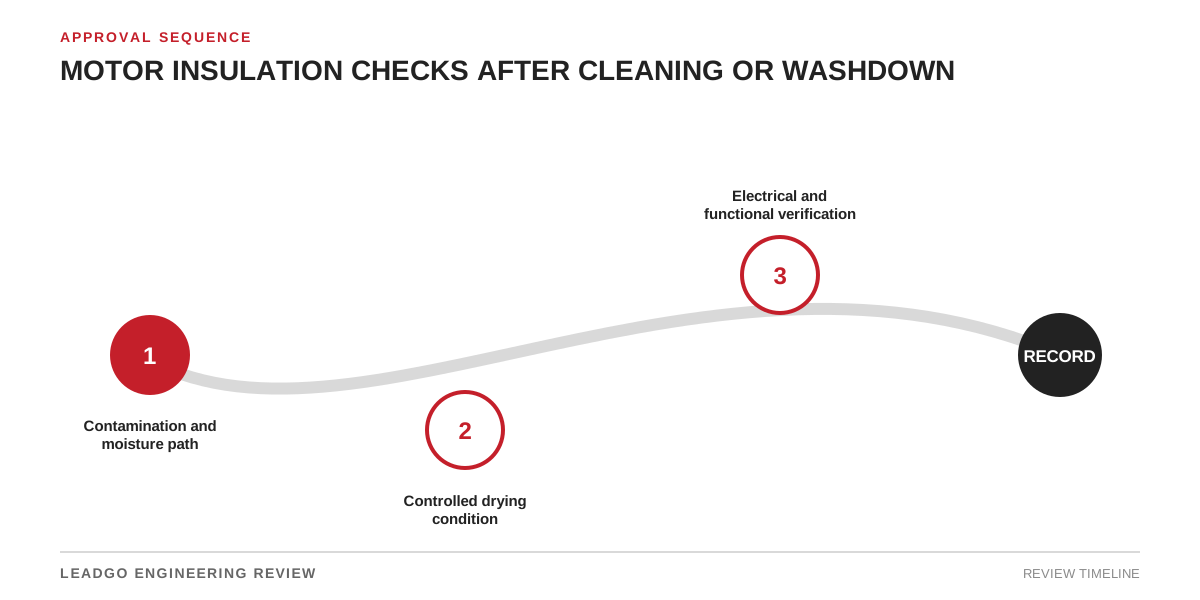
Cleaning can remove conductive dirt, but water trapped in terminal boxes, sensor circuits or windings can create a new failure mechanism.
Return-to-service decision
- Identify the cleaning agent, pressure, direction and areas exposed.
- Inspect drains, terminals, leads, RTDs and heaters for retained moisture or residue.
- Dry by a method approved for the insulation system; control temperature and airflow.
- Measure phase-to-earth and, where applicable, phase-to-phase insulation resistance with test voltage, duration and winding temperature recorded.
- Energise only after the trend, inspection and acceptance basis agree.
| Record | Why it matters | Warning sign |
|---|---|---|
| Pre/post-cleaning condition | Separates existing damage from cleaning effects | Cracks, tracking or residue |
| IR trend with temperature | Shows drying progress | Plateau at an unacceptable level |
| Accessory checks | Finds wet auxiliary circuits | Unstable sensor/heater readings |
| Final approval | Names decision owner and limits | Acceptance based on one number |
Related reading: insulation resistance testing and motor IP rating.