
Decarbonisation policy reaches equipment budgets eventually. For motor suppliers, the useful question is not whole-line electrification but which specific retrofits carry measured, defensible savings.
A cement plant carries motors across four process stages — roughly 30 in crushing and pre-homogenisation, 15 in raw meal preparation, 50 in preheating and calcining, 60 in grinding and dispatch. More than 150 machines per plant. That population is why plant-level energy targets end up as a motor selection problem.
Route one: replacing ageing DC kiln drives
Rotary kilns are large, slow and old. A kiln shell of 3–8 m diameter and 50–250 m length, inclined 2–5 degrees, turning at 1–4 rpm, driven by a DC motor installed decades ago, is a common configuration. Converting those drives to AC machines on modern drives is now routine work across the industry.
Efficiency is only half the argument. The other half is that spare parts for obsolete DC drives are increasingly unavailable, which converts the question from “should we upgrade” into “when will we be forced to.” Two product routes address it: low-speed direct-drive permanent-magnet motors for multi-stage transmission replacement, and high-voltage induction machines in frames 355–630 for the largest drives.
Routes two and three: direct drive and fluid machinery
| Retrofit route | Series | Verified result | Typical equipment |
|---|---|---|---|
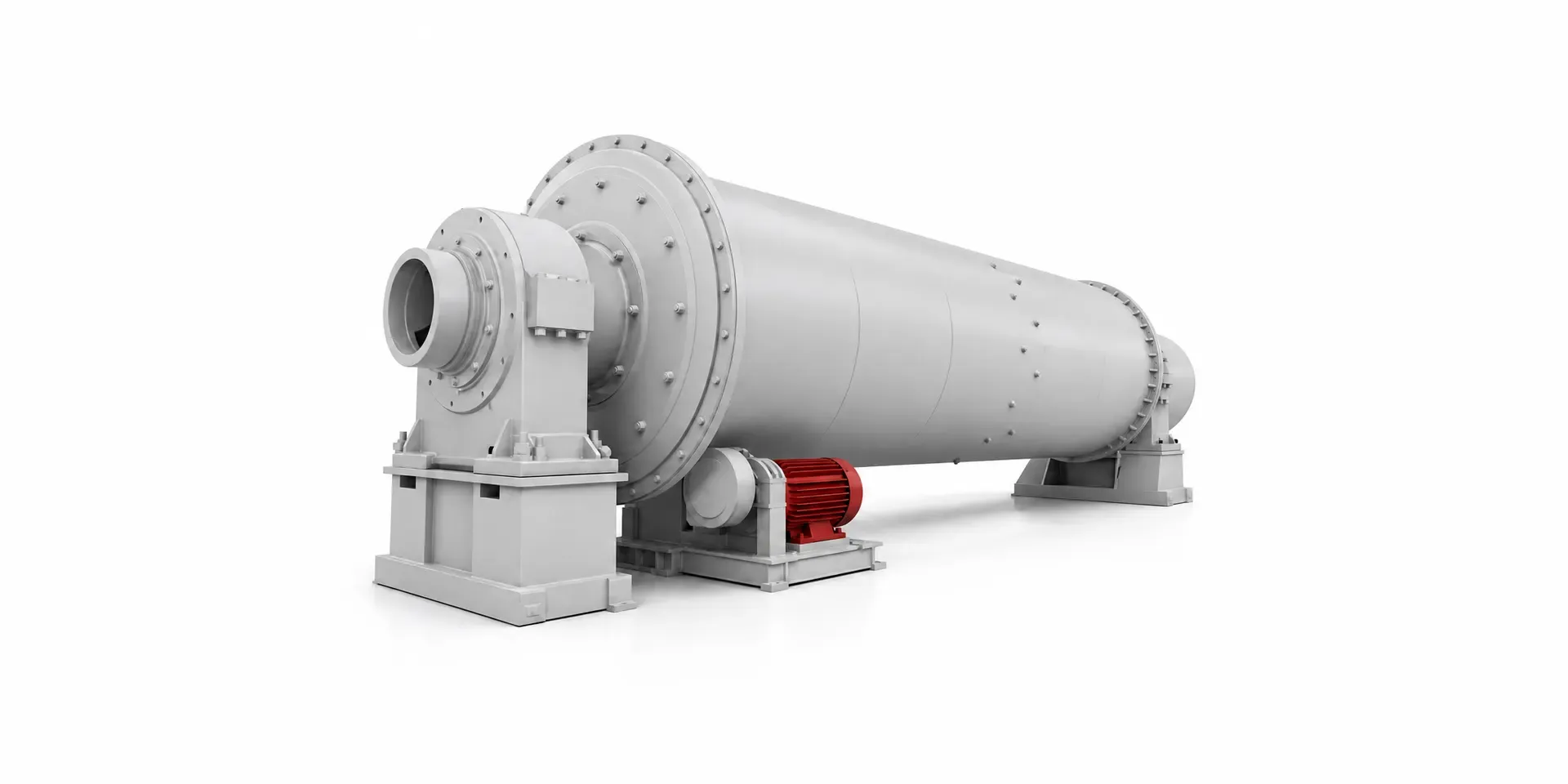
| Multi-stage geared → PM direct drive | DZTYP | ~20% average savings | Ball mills, vertical roller mills, rotary kilns, long conveyors |
| High-speed fluid machinery conversion | GTYP | 30.6% average savings on three-dimensional flow centrifugal fans | Blowers, circulation fans |
| Variable speed / frequent starting | TYP | 12–15% energy saving, 5–10% efficiency gain | Hoists, conveyors, hydraulic units |
| Concrete pipe production line | TYP 225S2-6, 45 kW | 44.2% saving, replacing an older variable-speed motor type | φ1200×2000 pipe line |
| Ball mill retrofit | TYP 280S, 75 kW | 8% saving, replacing a standard induction motor | Ball mill |
The last two rows are the important ones to read together. Both are genuine measured results; they differ by a factor of five because the equipment they replaced differed. Presenting either number on its own would be misleading.
The selection logic in one paragraph
Constant speed at close to rated load — crushers, storage conveyors — takes a high-efficiency IE5 induction motor. Variable speed or frequent starting — dust collection fans, hoists — takes the TYP series. High-speed fluid machinery — blowers — takes GTYP. Multi-stage transmission — ball mills, vertical mills, kilns — takes DZTYP. Four duty categories, four product lines. No single series covers a cement plant.
High-voltage duty is a separate conversation
The largest consumers in the plant — raw mills, kilns, cement mills, circulation fans — generally require high-voltage machines rather than standard low-voltage products. Coverage in that band spans box-type high-voltage induction series and compact high-voltage designs, across frames 355–630 and ratings up to 3150 kW at 6 kV.
For these ratings the first criterion is reliability and site fit, not efficiency class. A high-voltage mill drive that saves 3% and trips the line is not an energy project; it is an outage. Efficiency is the second question here, not the first.