
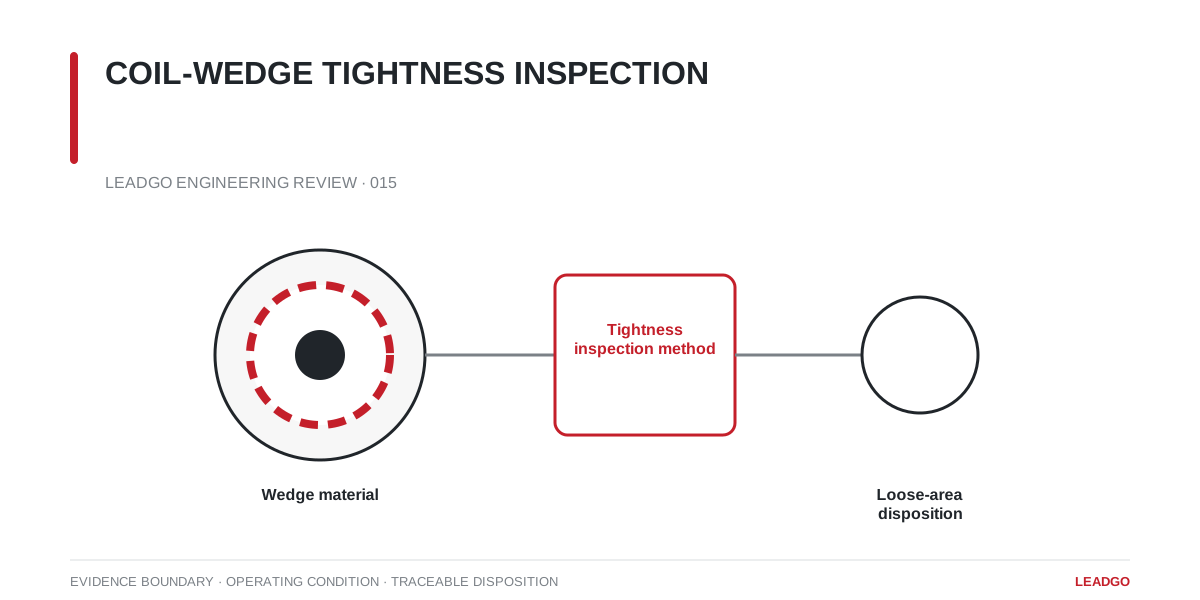
Slot wedges form part of the winding support system. Their inspection needs repeatable coverage and an approved disposition, especially after repair, transport damage or evidence of winding movement.
| Record field | Purpose | Required detail |
|---|---|---|
| Slot and axial location | Makes the indication traceable | Numbering scheme and inspection direction |
| Inspection method | Allows comparison | Tool, technique and examiner |
| Observation | Separates condition types | Sound/response, movement, damage or contamination |
| Adjacent condition | Adds winding context | End-winding support and visible insulation condition |
| Disposition | Controls repair and release | Accept, repair, expand inspection or engineering review |
Inspect without creating damage
Use the approved method for the particular wedge and winding construction. Avoid sharp tools, uncontrolled impact or any technique that can damage insulation. If access is limited, record the uninspected area rather than reporting full coverage.
After repair, repeat the mapped inspection and retain before-and-after records. Any widespread or recurring indication should trigger review of the support system and repair process, not only replacement of individual wedges.
Related reading: motor manufacturing tolerances and factory acceptance testing.