
Vibration frequency alone rarely proves the fault; operating speed, direction, phase, structural response and machine condition must agree. Different faults can produce energy near running speed, while one physical fault can appear differently at the motor, coupling and driven equipment.
The question behind the specification
A useful review begins with the driven equipment, the supply and control arrangement, the mechanical interface and the site condition. Keep the machine configuration fixed while comparing locations, directions, speed changes, load changes and phase relationships. If one of those inputs is still open, mark it as an assumption instead of hiding it inside a general note.
This matters because the motor is only one part of the drive train. The equipment owner defines the duty and acceptance criteria; the motor supplier confirms what the offered design can deliver. Keeping those responsibilities separate makes technical questions easier to close.
Build the review from evidence
| Step | Review point | Why it matters |
|---|---|---|
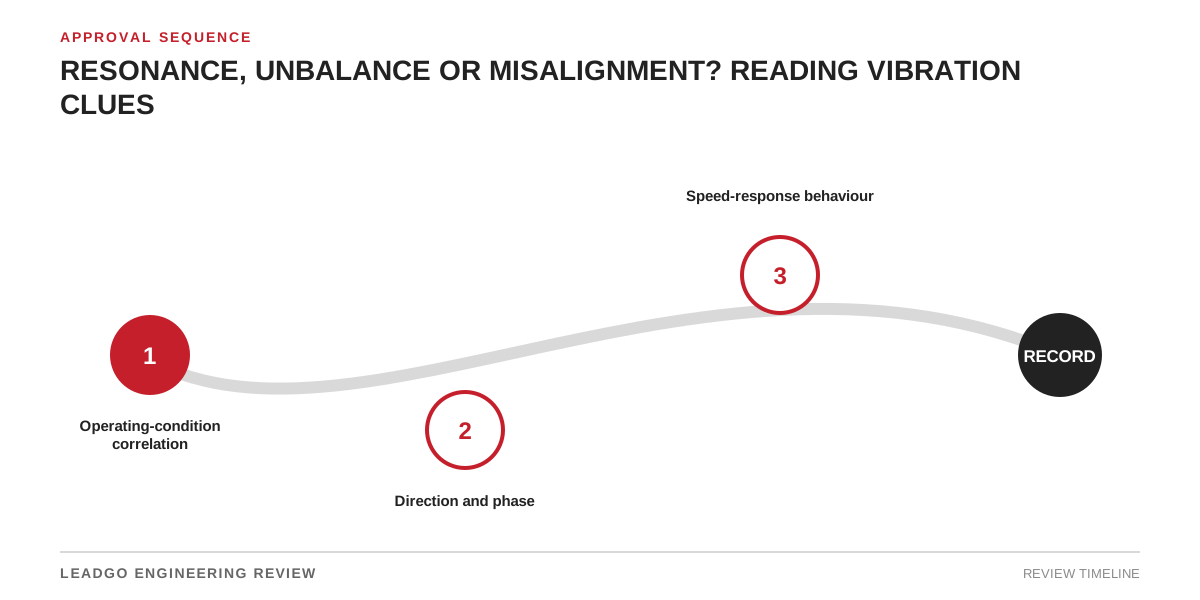
| 1 | Operating-condition correlation | Record speed, load, temperature and process state with every measurement. |
| 2 | Direction and phase | Compare horizontal, vertical and axial response plus phase where the measurement method supports it. |
| 3 | Speed-response behaviour | Observe whether amplitude follows speed smoothly, peaks in a narrow band or changes after alignment. |
What a simple checklist can miss
- Diagnosing from one spectrum. A single point cannot show structural shape, machine-to-machine relationship or repeatability.
- Balancing before checking looseness and alignment. Added correction weight can mask rather than remove the original cause.
Leave a traceable decision
The approval record should be short enough to use and detailed enough to audit. Keep the following items with the decision:
- route data with speed and load recorded
- phase or operational-deflection information where available
- before-and-after results for each corrective action
Where a limit comes from the manufacturer, request confirmation for the exact motor and revision. Where it comes from the plant or driven equipment, identify the responsible engineering owner. Photographs and field measurements are useful supporting evidence, but they should not replace a controlled drawing or test record.
Decision rule
Vibration frequency alone rarely proves the fault; operating speed, direction, phase, structural response and machine condition must agree. Apply that rule to the complete operating envelope, not only the rated point. If the required evidence is missing, leave the item open and name what must be supplied before manufacture, shipment or energisation.