
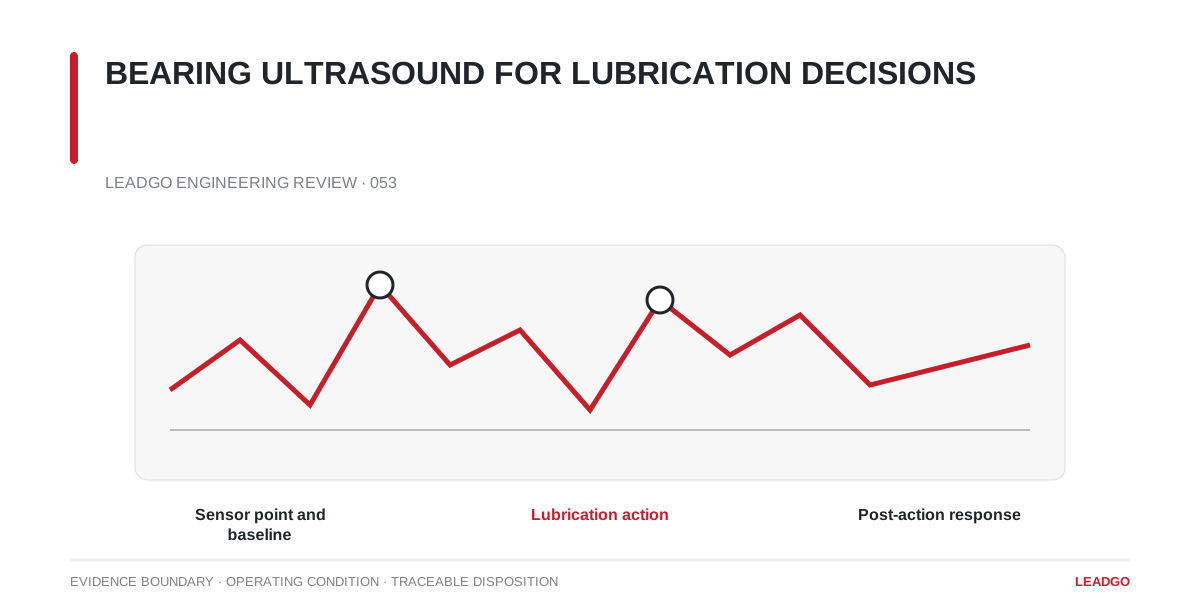
Ultrasound can reveal a change in bearing friction or impact activity, but the reading is sensitive to sensor placement, gain, load and background noise. Treat it as a trend, not a grease meter.
| Step | Record | Decision |
|---|---|---|
| Baseline | Point, setup, speed, load and sound file | Confirm the reading is repeatable |
| Pre-action check | Lubrication history, temperature and vibration context | Exclude obvious non-lubrication causes |
| Controlled action | Grease specification and applied amount per approved procedure | Avoid uncontrolled additions |
| Post-action check | Same-point reading after the defined settling condition | Stop and investigate if response is adverse or absent |
Preserve the diagnostic trail
Mark the measurement point physically or on a route drawing. Save sound files and instrument settings, not just a single level. Compare drive-end and non-drive-end behaviour only with awareness that bearing type, load and acoustic path may differ.
Where temperature, vibration or process behaviour is also changing, combine the evidence before deciding on further lubrication or bearing work.
Related reading: repeat motor bearing failure and bearing temperature alarm and trip review.