
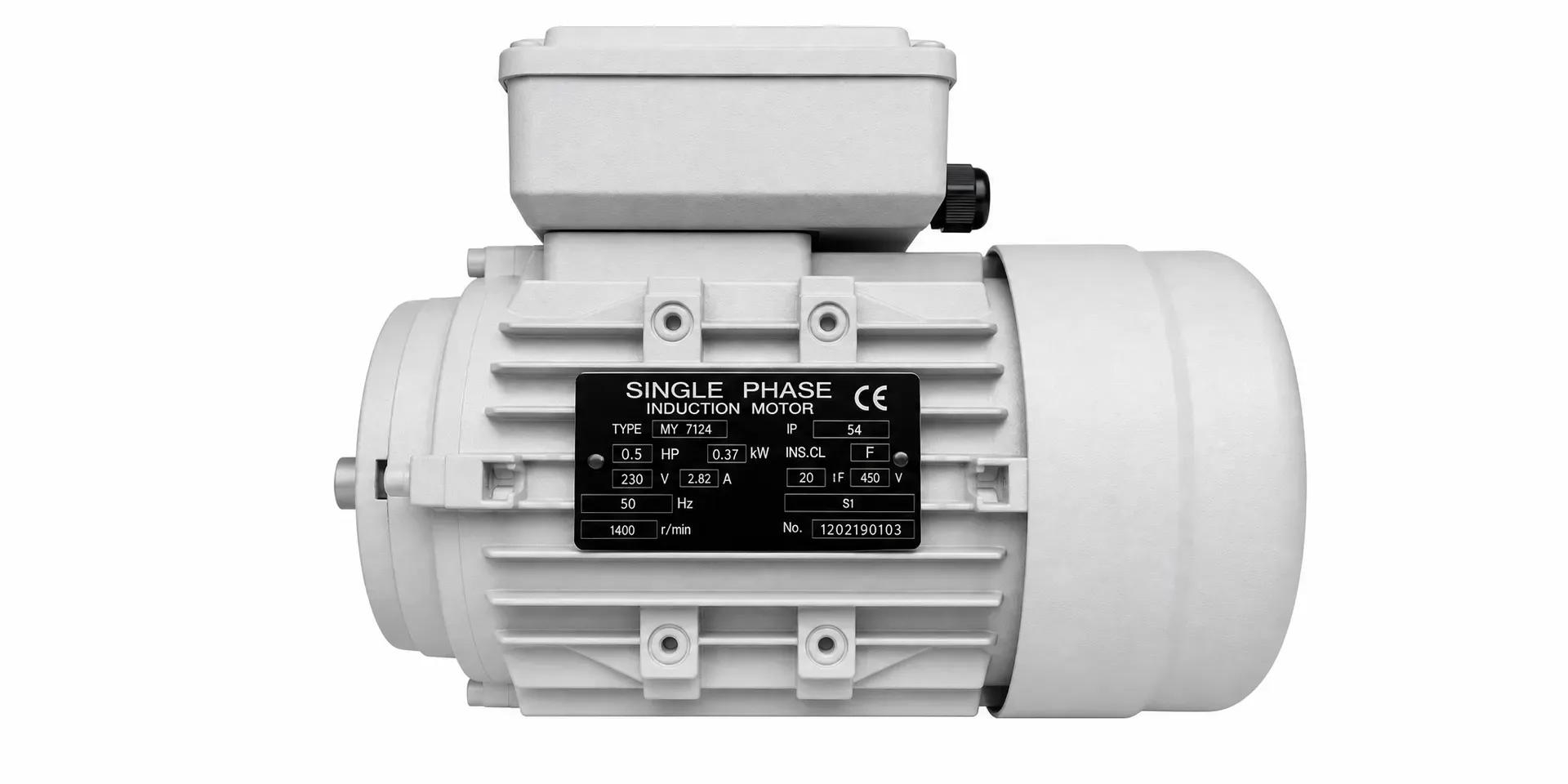
A clamp meter costs less than the shipping on a single replacement motor, and it settles an argument that otherwise comes down to trusting a nameplate. The question buyers are asking, “is this motor really the horsepower it claims to be,” has a field-verifiable answer. You don’t need to know the motor’s true efficiency or power factor to get it.
The pattern this is checking for
Buyer discussion around small and mid-size motors returns to a specific complaint often enough that it’s worth naming directly. One frequently cited example: a compressor motor pulling 13 A at 120V, sold as a 3 HP or 4.5 HP unit. A separate, independent dataset of buyer questions turned up the same phenomenon from a different angle: a motor with a 5 HP nameplate whose measured current corresponded to roughly 2.4 HP of real output. Two unrelated sources and two independent measurements landed on the same underlying pattern, a nameplate number and a measured number that don’t agree.
Method 1: compare current against the published table, no formula required
The fastest check requires no calculation. NEC Tables 430.248 (single-phase) and 430.250 (three-phase) publish the full-load current every genuine motor of a given horsepower and voltage should draw. Regulators require these table values, not the nameplate figure, for sizing circuit conductors and overcurrent protection, which says something about how standardized they are.
| Horsepower | 115V single-phase FLC | 230V three-phase FLC |
|---|---|---|
| 1 HP | 16 A | — |
| 1.5 HP | 20 A | — |
| 2 HP | 24 A | — |
| 3 HP | 34 A | 9.6 A |
| 5 HP | 56 A | 15.2 A |
Take the 120V compressor example above: a genuine 3 HP motor at that voltage should draw about 34 A. The reported 13 A corresponds to roughly 1 HP of real output, matching the buyer’s own conclusion that the “3 HP” label was wrong by a factor of three. No formula was needed to catch it. The mismatch is visible on sight once the table value is known.
This works two ways. You can measure current in the field with a clamp meter while the motor runs at its full rated mechanical load. Faster still, you can check whether the current the supplier states on their own datasheet is anywhere near the standard table value for the horsepower they’re claiming. A supplier whose declared full-load current is implausibly low for the horsepower on the tag has a documentation problem before you’ve taken a single measurement.
Method 2: the full formula, when you trust the efficiency figure
If you have a reliable efficiency and power factor for the motor, from an IE-class rating you trust or from a comparable certified unit, the complete relationship for a three-phase motor is:
HP = (√3 × V × I × PF × Efficiency) ÷ 746
Worked example: a 480V motor measured at 28 A, with efficiency of 0.91 and power factor of 0.86, works out to roughly 24.4 HP of real output. Compare that figure against the nameplate claim the same way you’d compare Method 1’s current reading against the table.
This method is more precise when the inputs are trustworthy, but it is also the one place a dishonest supplier can cheat twice: first on the horsepower, then on the efficiency and power factor numbers used to calculate it. That is the practical reason Method 1 is the better first check. It depends on nothing the supplier tells you except the current, which you can measure yourself.
What a mismatch tells you, and what it doesn’t
A large gap between the claimed horsepower and the current-based figure is a red flag, not a rounding error. Full-load current scales close to linearly with horsepower at a given voltage, so a motor drawing a third of the expected current isn’t a “slightly optimistic” rating. It’s a different motor than the one on the tag. What the gap doesn’t tell you is why: mislabeling happens both through deliberate substitution and through re-badging a returned or salvaged unit with new markings. Either way, the fix on the buyer’s side stays the same. Ask for the full-load current on the datasheet before you order, and check it against the table above before you sign off, not after the unit shows up underperforming.