
A motor foundation is ready for alignment only when support, grout condition, fasteners and baseplate geometry have been inspected as one load path. A level top surface does not prove full support, and a visually complete grout pour does not prove that voids or weak edges are absent.
Why the surrounding system matters
A useful review begins with the driven equipment, the supply and control arrangement, the mechanical interface and the site condition. Review concrete, grout, baseplate, soleplates, anchors and machine feet before final alignment begins. If one of those inputs is still open, mark it as an assumption instead of hiding it inside a general note.
This matters because the motor is only one part of the drive train. The equipment owner defines the duty and acceptance criteria; the motor supplier confirms what the offered design can deliver. Keeping those responsibilities separate makes technical questions easier to close.
Review the decision in three parts
| Step | Review point | Why it matters |
|---|---|---|
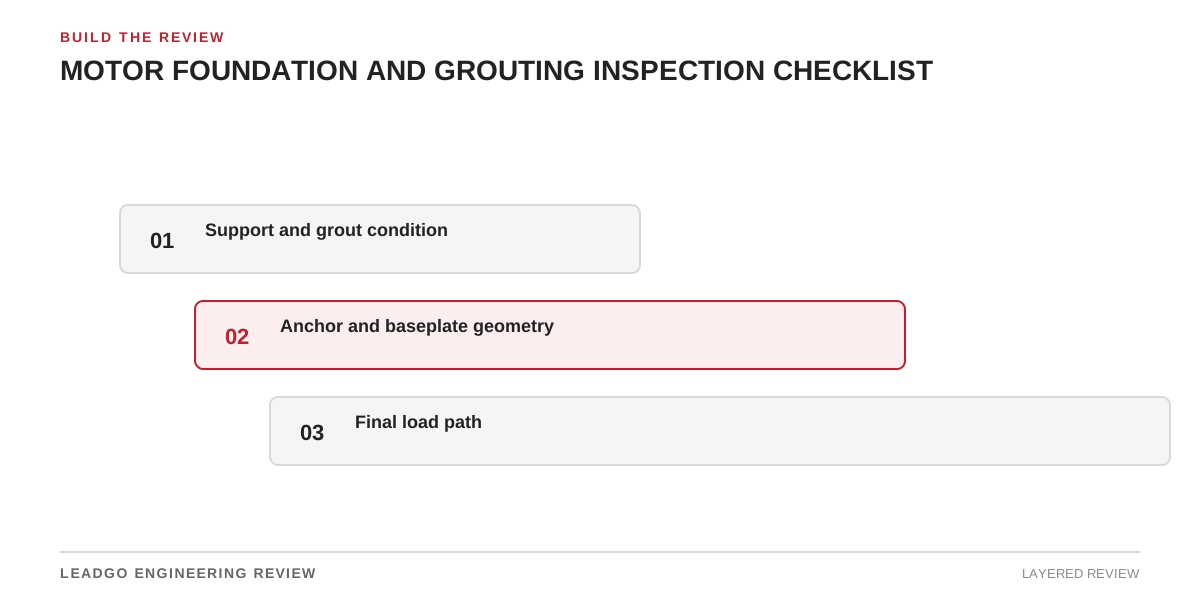
| 1 | Support and grout condition | Inspect contact, void indications, cracks, edge support and the specified grout curing condition. |
| 2 | Anchor and baseplate geometry | Confirm anchor position, thread engagement, bolt condition, level and baseplate distortion. |
| 3 | Final load path | Verify that shims, chocks, feet and grout transfer operating loads without rocking or local bending. |
Two shortcuts to avoid
- Aligning before grout and piping are final. Later curing, bolt tightening or pipe connection can move the shaft centreline.
- Using hold-down bolts to pull a foot into place. This can hide poor support while distorting the motor frame.
Close the open points in writing
The approval record should be short enough to use and detailed enough to audit. Keep the following items with the decision:
- foundation and baseplate inspection record
- grout material, placement and curing record
- final level, soft-foot and anchor-bolt checks
Where a limit comes from the manufacturer, request confirmation for the exact motor and revision. Where it comes from the plant or driven equipment, identify the responsible engineering owner. Photographs and field measurements are useful supporting evidence, but they should not replace a controlled drawing or test record.
Decision rule
A motor foundation is ready for alignment only when support, grout condition, fasteners and baseplate geometry have been inspected as one load path. Apply that rule to the complete operating envelope, not only the rated point. If the required evidence is missing, leave the item open and name what must be supplied before manufacture, shipment or energisation.