
There is one sentence in the rating standard that decides more purchase orders than any table in it, and almost nobody quotes it.
Direct answer
Stating the duty is the purchaser’s job. Clause 4.1 of IEC 60034-1:2022 — adopted identically in China as GB/T 755—2025 — gives the user three ways to do it: numerically, as a time-sequence diagram of the varying quantities, or by selecting one of S1 to S10 that is no less onerous than the duty expected.
And then:
Where the user does not indicate the duty, the manufacturer shall assume S1 — continuous duty.
That default is correct for a pipeline pump. It is wrong for a beam pumping unit, a crane, a crusher, a hoist, a mixer with a batch cycle, or anything that starts, brakes, or rests. And because the default is a standard requirement rather than a supplier’s choice, nothing in the quotation, the datasheet or the acknowledgement will tell you it was applied.
The ten types, and what each one is actually describing
Every duty type is a statement about heat, not about hours. The dividing question at each step is whether the machine reaches thermal equilibrium, and what happens to it between load periods.
| Duty | Name | What distinguishes it |
|---|---|---|
| S1 | Continuous | Constant load held until thermal equilibrium is reached |
| S2 | Short-time | Constant load for a stated time, too short to reach equilibrium, then de-energised long enough to cool to within 2 K of the coolant |
| S3 | Intermittent periodic | Identical cycles of constant load and de-energised rest; starting current does not significantly affect temperature rise |
| S4 | Intermittent periodic, including starting | As S3, but the starting period does significantly affect temperature rise |
| S5 | Intermittent periodic, including electric braking | As S4, plus a braking period |
| S6 | Continuous-operation periodic | Constant load alternating with no-load running — no de-energised rest |
| S7 | Continuous-operation periodic, including electric braking | Start, constant load, electric braking; no rest. Duty factor is 1 |
| S8 | Continuous-operation periodic with related load/speed changes | Constant loads at two or more predetermined speeds — for example a pole-changing motor |
| S9 | Non-periodic load and speed variations | Load and speed vary non-periodically within the permissible range, including frequent overload well above the reference load |
| S10 | Discrete constant loads and speeds | A set number of discrete load/speed combinations, each held long enough to reach thermal equilibrium |
The letter alone is not the specification
Each designation carries required suffixes, and leaving them off leaves the specification incomplete:
- S2 takes the duration.
S2 60 min. - S3 and S6 take the cyclic duration factor.
S3 25%,S6 40%. - S4 and S5 take the duty factor plus the motor inertia and the load inertia referred to the motor shaft.
S4 25% JM = 0.15 kg·m² Jext = 0.7 kg·m². - S7 takes the two inertias.
- S8 takes the inertias, plus the load, speed and duty factor at each speed.
- S10 takes the per-unit load and duration pairs plus the relative expected thermal life.
S10 p/Δt = 1.1/0.4; 1/0.3; 0.9/0.2; r/0.1 TL = 0.60, whererdenotes the de-energised state.
A specification that says “S4” and stops has not said enough for anyone to size a motor against it.
The defaults hidden inside the percentage
Clause 5.2.3 sets the assumptions behind any S3-to-S8 figure. Unless otherwise specified, the duration of the load cycle is 10 minutes, and the cyclic duration factor is one of four values: 15%, 25%, 40% or 60%.
Two consequences follow. A cycle that is not 10 minutes long has to be stated explicitly, because the percentage does not carry it. And a duty factor that is not one of those four values is a departure from the default — fine to specify, but it needs saying rather than assuming.
For S10, clause 5.2.5 adds a ceiling: unless another national or IEC standard specifies otherwise, the maximum load shall not exceed 1.15 times the S1-based reference load, and the maximum permissible load within a cycle must account for the whole machine — insulation life behaving to an exponential law, bearing temperatures, and thermal expansion of other parts.
Who supplies what
The standard is explicit about the division of information, and it is not symmetric:
- The user indicates the duty, and where a periodic duty is selected, the duty factor.
- The manufacturer supplies the motor inertia
JMand the relative expected thermal lifeTL, because — as clause 4.1 states plainly — the user is not normally in a position to provide them.
So an enquiry that asks the supplier to “confirm the duty” has the transaction backwards. What a supplier can confirm is whether a machine meets the duty you state, and supply the inertia figures needed to check the cycle.
Where this bites in practice
A beam pumping unit is the clearest case. It starts against a loaded rod string, runs a cyclic load with two torque peaks per stroke, and may be stopped and restarted by a pump-off controller several times an hour. Specified as S1, it is being sized against an assumption that never occurs on that well. We looked at what that does to the motor choice in why NEMA Design D is specified for oil well pumps.
Crane and hoist duty, brake motors and pole-changing drives are the other places it shows up — S4, S5 and S8 exist precisely because those loads are not S1, and because starting and braking heat is part of what the machine has to dissipate.
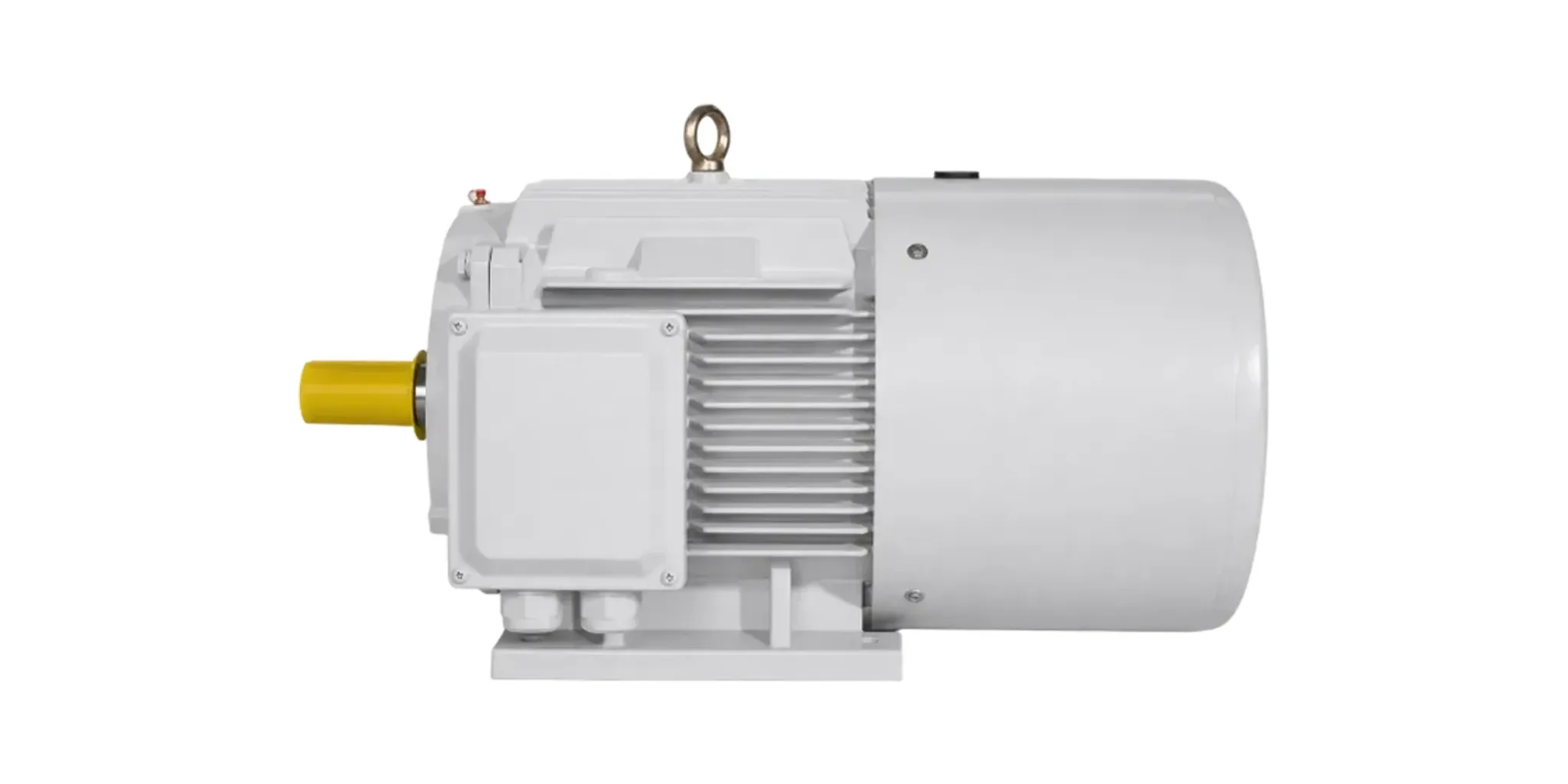
LEADGO’s brake motors and pole-changing series are built for cyclic duty rather than for continuous running. State the duty and the duty factor on the enquiry, and ask for JM with the quotation — those two lines remove the default before it is applied.
A note on which edition you are reading
GB/T 755—2025 is an identical adoption of IEC 60034-1:2022. It was published on 2025-08-01 and takes effect on 2026-02-01, replacing GB/T 755—2019. A buyer comparing a Chinese supplier’s duty statement against IEC 60034-1 is comparing against the same text, which removes one of the more common sources of argument in cross-border specification review.
Going deeper
- Oil well pump motors: why NEMA Design D is specified — a cyclic load, and what it does to the motor choice
- NEMA MG 1 explained — the parallel US standard, and where service factor fits
- Motor IP ratings: what each digit is actually tested for — the other nameplate code that is routinely read as a single ladder