
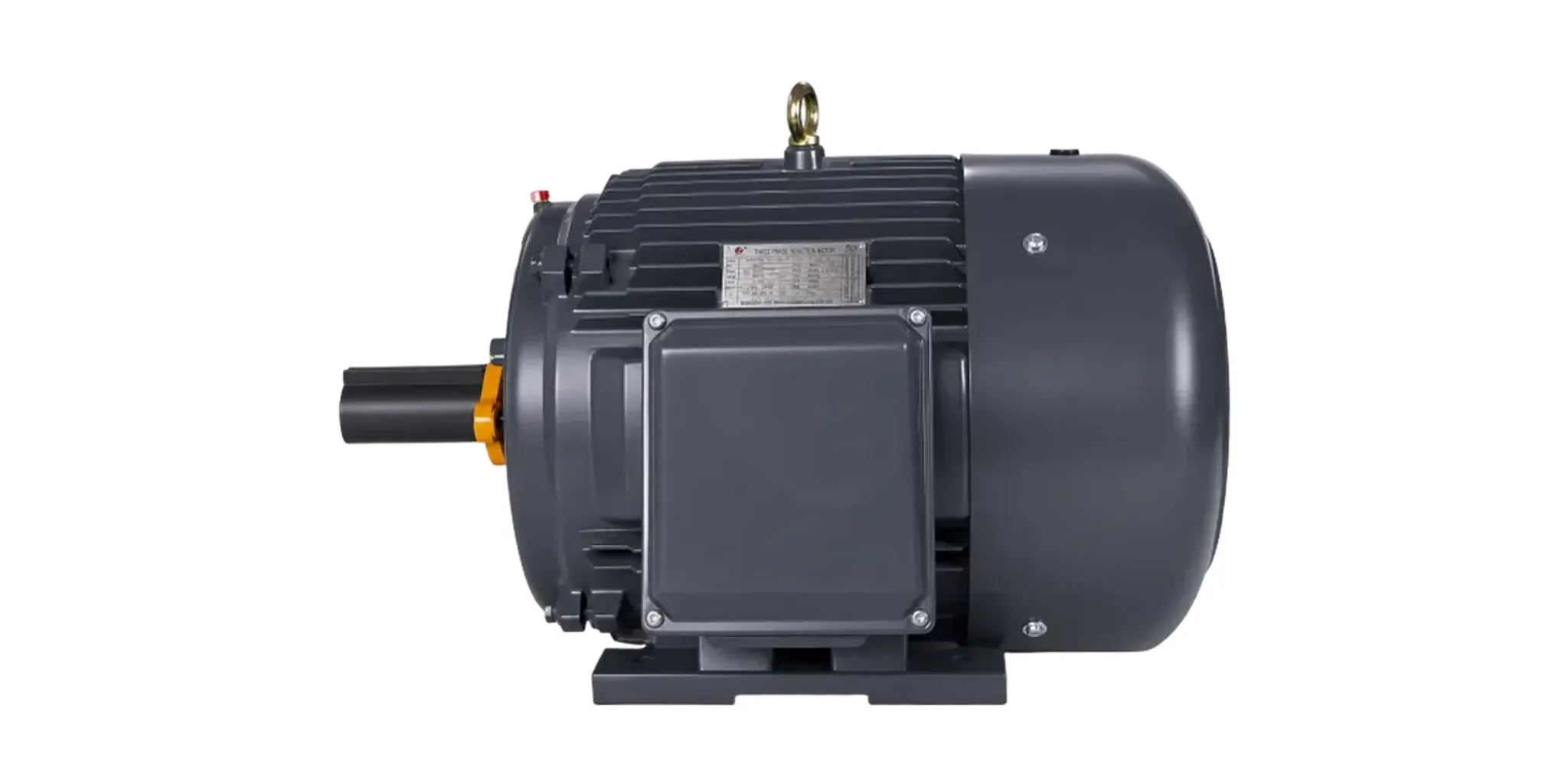
Service factor is the one nameplate field that looks like a gift. A 100 hp motor marked 1.15 appears to be a 115 hp motor that someone forgot to charge you for. The standard that defines the field takes a more specific position, and it is worth reading before sizing a drive around it.
The short answer
A 1.15 service factor permits loading the motor to 1.15 times its rated horsepower, provided rated voltage and frequency are maintained and the usual service conditions hold. That much is a straight permission in ANSI/NEMA MG 1.
The same standard then states what the loading costs. Operating at the temperature rise allowed for service factor load ages the winding insulation at approximately twice the rate associated with the 1.0 service-factor rise. The comparison concerns thermal ageing of the insulation; bearing load, lubrication, ambient and the actual temperature profile still influence the life of the complete motor.
What the standard attaches to the permission
Three conditions and two consequences, all of them in clause 20.7.3.1.
The conditions: voltage and frequency held at the nameplate values, and the usual service conditions met. Ambient above the design figure, a sagging supply or a restricted cooling path each erode the same thermal margin the service factor is drawn from, so a motor already living with one of those has less headroom than the nameplate implies.
The consequences: at service factor load the machine may show efficiency, power factor and speed different from its rated-load values. The nameplate efficiency describes the rated point. Nothing in the standard promises you keep it at 115%.
Where the margin comes from
The service factor is visible in the temperature rise tables. MG 1 gives one table for a 1.0 service factor machine at rated load and a separate one for a 1.15 machine at service factor load, measured by resistance.
| Insulation class | Rise allowed, 1.0 SF at rated load | Rise allowed, 1.15 SF at service factor load |
|---|---|---|
| A | 60 °C | 70 °C |
| B | 80 °C | 90 °C |
| F | 105 °C | 115 °C |
| H | 125 °C | 135 °C |
Ten degrees across every class. That is the whole of it: the service factor buys permission to run the same windings ten degrees hotter, and the ageing statement in 20.7.3.2 is the invoice for those ten degrees.
MG 1 adds a caution about reading the two tables together: they apply individually to a specific rating, and the standard does not intend them as a dual rating on one motor. A 1.15 service factor machine has no rated-load temperature rise specified at all.
The torque trap
This one catches people who size on the service factor number and stop there.
The machine’s torque and current do not change when you load it further. They are what the design gives. What changes is the margin, because the percentage figures for locked-rotor current, locked-rotor torque and breakdown torque are all referred to the rated horsepower. Apply a service factor load and you are asking that same unchanged torque to accelerate more, which is why MG 1 notes that motors operating in the service factor range may not have the torque margin the standard states elsewhere.
For a high-inertia or hard-starting load, that matters more than the thermal question. The machine may carry the load once it is up to speed and still struggle to get it there.
What the field is for
Service factor provides defined overload capability under the standard’s stated conditions. In practice, buyers often use that capability for:
- Load that varies around the nameplate figure rather than sitting on it
- Supply voltage that is nominally correct and occasionally is not
- A process excursion that puts the machine above rating for a while
- The gap between the calculated load and the load the equipment actually imposes
MG 1 does not say that every use must be temporary; it permits continuous operation under the applicable conditions while warning of reduced life and changed performance. For a new installation expected to operate continuously above nameplate output, compare the lifecycle consequences with selecting a motor whose rated point matches the normal load.
If the nameplate has no service factor at all
Plenty of machines carry no such field, and nothing is wrong with them. Service factor is defined in the NEMA standard and belongs to that tradition of marking. A nameplate produced to the IEC convention generally states its continuous capability through the duty type and the insulation and temperature rise markings instead.
When you are comparing a NEMA-marked machine against an IEC-marked one, comparing service factors is not available to you. Compare the duty type, the insulation class and the rise, which are the quantities the service factor is derived from anyway.
Common mistakes
- Sizing a continuous load at the service factor horsepower and treating the rated figure as conservative.
- Applying the service factor while the supply sits below nameplate voltage, which spends the margin twice.
- Setting overload protection from the service factor horsepower without checking what the motor’s thermal limit actually is.
- Assuming the nameplate efficiency survives into the service factor range.
- Sizing a high-inertia start on service factor horsepower when the torque percentages refer to the rated horsepower.
Reading the rest of the plate
Service factor sits alongside two other fields that get skipped for the same reason: they look like fine print. The insulation class paired with the temperature rise tells you how much thermal margin the designer built in, and the code letter tells you what the machine will draw on starting. Those three together say more about how a motor will behave in service than the horsepower figure does.
LEADGO builds to both marking conventions, so a machine from us arrives on a NEMA frame or an IEC one depending on the series, and the plate follows the convention it was built to. If you are working from a nameplate photograph and cannot make a field out, send it to us and we will read it back rather than guess at it.
Related: NEMA MG 1 explained · Why oilfield motors run hot · Rewind or replace