
Pipeline duty reads like the easiest motor specification on an oil field. Constant load, steady flow, no cycling, no reciprocating anything. Then you look at how a station actually changes its throughput, and most of that simplicity goes away.
Direct answer
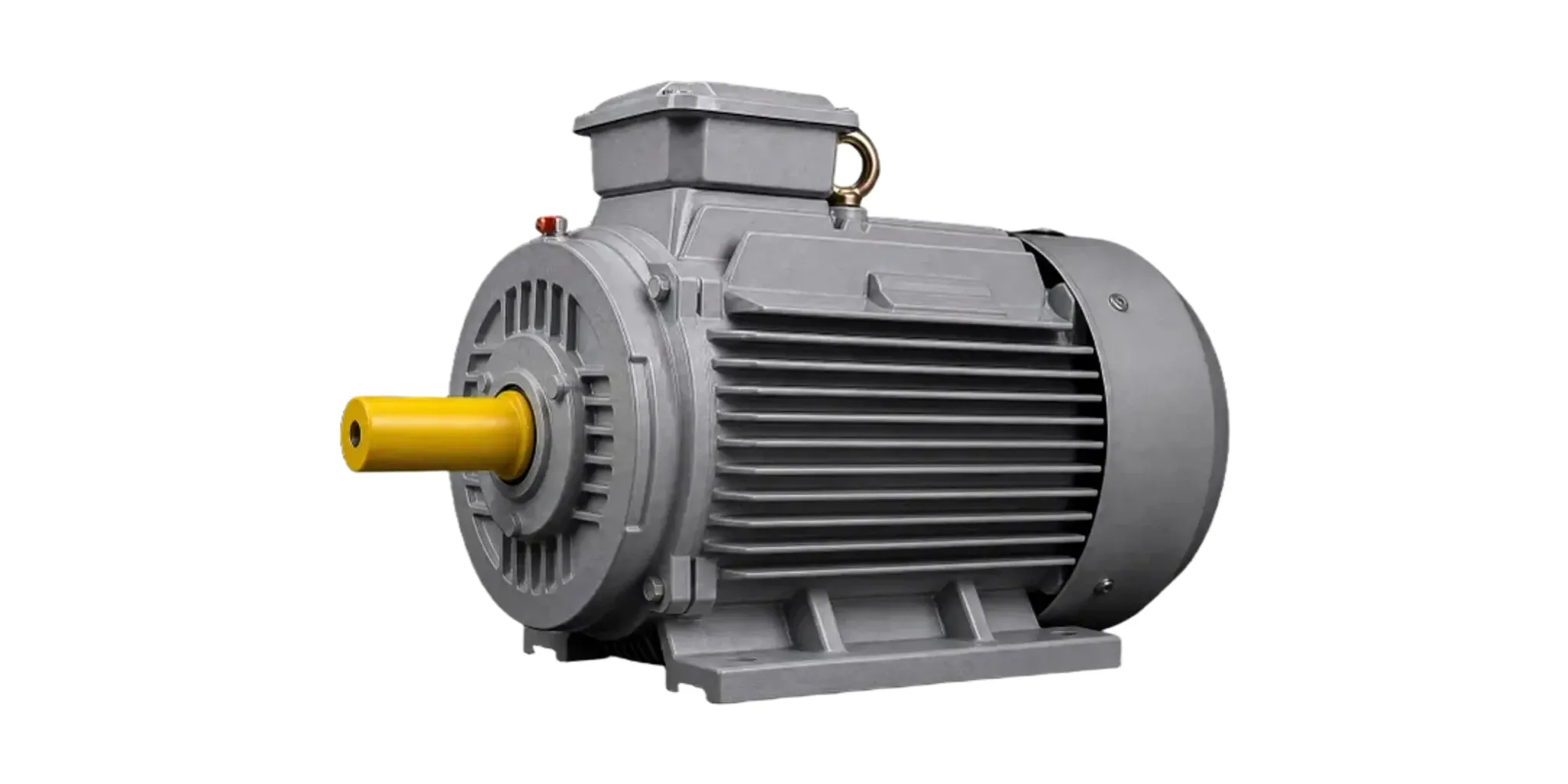
Main pipeline pumps are usually driven by 3,600 rpm induction motors with NEMA Design B characteristics, started full-voltage, across the line.
That is the opposite of the oilfield answer, and for a good reason. A centrifugal pipeline pump is a smooth load with no torque peaks to absorb, so there is nothing for slip to do except cost efficiency. Where a beam pump buys slip deliberately — see why NEMA Design D is specified for oil well pumps — a pipeline pump buys the opposite.
The station is the load, not the pump
Stations sit at the head of the line and at intervals along it, and the arrangement inside them is what shapes the electrical duty:
- Two or three pumps connected in series, with bypass arrangements using check valves across each pump.
- The pumps may all be the same capacity, or one may be half size.
- Running them singly or in combination gives a range of capacities in steps.
- Throttling the discharge provides finer control between those steps — and also allows operation when the suction pressure is inadequate for full flow.
So capacity is adjusted principally by switching whole machines in and out. Which means the number that matters most is not the running load. It is how often the motor starts.
A machine started across the line several times a day is a different specification from one started twice a year, because full-voltage starting puts several times full-load current through the windings each time. Starting frequency belongs on the enquiry, stated the way power is stated.
What makes the duty vary at all
A booster station has to operate under changing conditions for three reasons that the literature names explicitly:
- Differences in liquid gravity — the line does not always carry the same product.
- Withdrawals at intermediate points along the line.
- The shutting down of other booster stations.
The third is the one worth sitting with. A station’s operating point is partly set by what the rest of the line is doing. The duty a motor sees is a system property, not a local one — which is why a station that has run comfortably for years can change character when another station upstream is taken out for maintenance.
Stopping is where the motor meets the pipe
This is the part most motor enquiries never touch, and it is the one with the most expensive failure mode.
A swing check valve is held open by flow and closed by the weight of its disc. The sizing intent is that the disc closes right when the flow stops — before the flow has had time to reverse.
If the flow reverses first, closure is then driven by the disc’s own weight plus the force of the reversing flow, which can be considerable. The disc slams, and that can produce water hammer, or break the disc by impact.
Two consequences follow for the drive:
- The deceleration rate after a trip is a design variable. Rotating inertia in the motor and coupling, and any controlled ramp-down, set how quickly forward flow decays — and therefore whether the check valve closes cleanly or slams.
- A check valve sized for horizontal service should not be installed on a vertical leg, because the sizing relies on the weight of the disc. That is a piping decision, but it changes what the drive has to avoid.
Tilting-disc check valves exist partly for this reason: a shorter closing swing leaves less time for flow reversal and slam.
Unattended stations change what the motor has to carry
Pumping stations are often unattended, and may be remotely controlled by radio or telephone circuits.
Nobody is standing there to notice a bearing getting warm or a winding running hot. Whatever instrumentation is fitted is doing the job a person would otherwise do, which raises the value of winding temperature detection, bearing temperature and vibration monitoring well above what the same machine would justify in a manned plant.
And an item easy to miss: auxiliary devices such as alarm contacts on the motor must themselves be suitable for the area classification. A correctly certified machine with an uncertified temperature contact wired into it is not a compliant installation.
Classification, and the enclosure that keeps winning
For outdoor installations, the usual classification encountered is Class I, Group D, Division 2. Three enclosure types suit it: NEMA weather-protected Type II, totally enclosed fan-cooled, and drip-proof with weather protection.
The drip-proof-with-weather-protection type is widely used, for two reasons that both show up on the purchase order: it is less expensive than the alternatives, and it carries a service factor of 1.15.
If the pumps are located indoors, a Division 1 classification is likely to apply instead. The motor must then be Class I, Group D explosion-proof, or separately ventilated with clean outside air brought to it by fans.
The literature’s own summary of how to choose is worth repeating as a checklist: installed cost, overall efficiency, and service factor of the available enclosures all influence the selection — not just the classification.
Where a drive changes the picture
Where AC drives are used on this duty, the inverter needs to work with low-slip induction motors or reluctance-type synchronous-induction motors. Such systems appear specifically where DC commutator motors are not acceptable — the examples given are hazardous atmospheres and high motor velocities, the same argument that moved drilling rig top drives off DC.
A drive also changes the stopping problem above, since a controlled ramp-down is a different event from a trip.
On the energy case
Pipeline duty runs close to continuous, at annual hours approaching the maximum, which is the condition where a point of efficiency compounds into real money. It is also the condition where a payback calculation is easy to get wrong.
We are not going to publish a saving percentage. The figure depends on your electricity tariff, your actual annual running hours, the load point relative to best efficiency, and what is installed now. What is portable is the method: measure the current load point, get the efficiency at that point rather than at full load, apply your own tariff and hours, and compare against the installed cost difference. Any supplier who gives you a percentage before seeing those four inputs is quoting a brochure.
What to settle before asking for a quotation
- Starting frequency — how many across-the-line starts per day, and whether hot restarts occur.
- The station arrangement — how many pumps, in series or parallel, equal or unequal capacity.
- The stopping case — what happens on a trip, and what the check valves need from the deceleration.
- Indoors or outdoors, and the classification drawing behind it.
- What instrumentation the unattended station requires, and whether those auxiliaries suit the classification.
LEADGO’s IE5 range is aimed at exactly this kind of near-continuous duty, and the high-voltage series covers station ratings above the low-voltage range. Send the starting frequency with the enquiry — on this duty it is the number most likely to be missing.
Going deeper
- Gas compressor motors: reciprocating versus centrifugal — the other midstream machine, where the start is also the specification
- Motor duty types S1 to S10 — why a frequently started machine is not S1 just because it runs for long periods
- NEMA MG 1 explained — where Design B and the service factor rules above are defined