
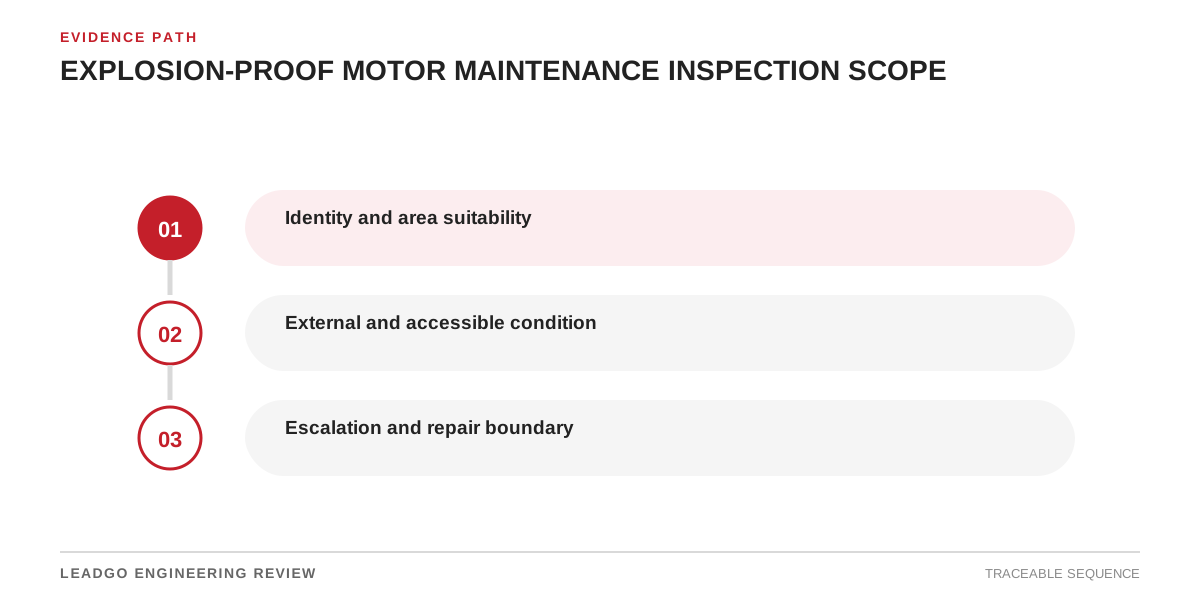
An Ex inspection should answer two questions: is the installed motor still suitable for the classified location, and has its protection concept been preserved in service?
Inspection-depth decision
- Use a visual inspection for defects apparent without tools or access equipment.
- Escalate to close inspection when loose hardware, entries, corrosion or installation condition needs hands-on checking.
- Use detailed inspection when internal condition, joints, terminals or measured clearances must be assessed by competent personnel.
| Review area | Evidence | Escalation trigger |
|---|---|---|
| Identity/suitability | Nameplate, certificate schedule, area data | Marking illegible or duty outside scope |
| Enclosure | Covers, fasteners, joints, corrosion | Damage, missing parts or unauthorized repair |
| Cable system | Glands, stopping plugs, seals, earthing | Loose, mismatched or unapproved entries |
| Operation | Temperature, vibration, trips | Deteriorating trend or unexplained event |
Inspection frequency should reflect environment, duty, previous defects and site procedure. High corrosion, vibration, repeated opening or contamination may justify shorter intervals.
Each record needs the exact motor identity, inspection level, accessible limits, observations, photographs, measurements, defect disposition and return-to-service authority. Keep unresolved items open; a checked box must not hide an inaccessible or unverified feature.
Related reading: Ex motor certificate verification and ATEX vs IECEx vs NEC.