
Permanent Magnet

TYC Series

TYC Series Three-Phase Permanent Magnet Synchronous Motor

A line-start permanent magnet synchronous motor: it starts asynchronously like an induction machine and then pulls into synchronism — no drive required to run it, and no slip once it is there.
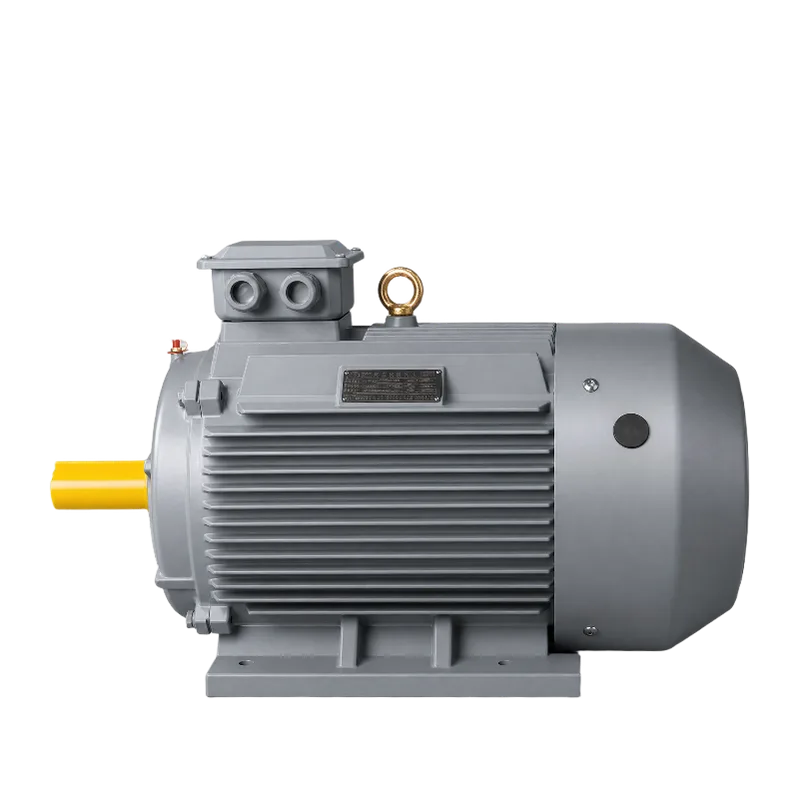
GB 30253 grade 1 / 25.5–55 kWLine start
TYC series three-phase permanent magnet synchronous motor

TYC uses rare-earth permanent magnets to give high efficiency and high power factor with low current, low temperature rise, no slip and a stable speed. Because it starts asynchronously, it can be switched directly onto the supply; paired with a suitable drive it will also run variable-speed across a range.

Against a YE3 induction motor of the same rating, the brochure figure is an average energy saving above 5% across the 25–120% load range.

Note on efficiency classes: TYC is built to grade 1 and grade 2 of GB 30253, the Chinese efficiency standard for permanent magnet synchronous motors. That is a different scale from GB 18613 / IEC 60034-30-1, which covers line-fed induction machines — the grades are not interchangeable, which is why the efficiency filter on the product list returns induction series only. Permanent magnet motors can also be assigned an IE code, but under GB/T 32891.2—2019 (identical to IEC TS 60034-30-2), a separate classification for variable-speed AC machines. If your specification calls for an IE code on a permanent magnet motor, ask us and we will quote it against that standard rather than converting a GB 30253 grade.

Core specifications

ParameterValue
Frame sizeH132 – H280 mm
Power range5.5 – 55 kW
Rated speed375 / 500 / 750 / 1000 / 1500 rpm (4 to 16 pole)
EfficiencyGB 30253 grade 1 or grade 2
Power factor0.93
Voltage & frequency380 V, 50 Hz (custom on request)
Protection degreeIP54 / IP55
Insulation classClass F
CoolingIC411
StartingAsynchronous start, synchronous running (line start capable)

Standards and certification

  • GB 30253 (permanent magnet synchronous motor efficiency)

Typical applications

  • Fans, pumps and compressors
  • Textile machinery, flotation cells, crushers
  • Beam pumping units and other speed-stable or speed-adjustable duty

Selection guide

Duty that needs a stable speed or a moderate speed adjustment range, and where running cost matters: crushers, conveyors, dust collection fans, and clamping or hydraulic pump drives on injection moulding machines.
Not to start it — TYC starts asynchronously and pulls into synchronism on a direct supply. A drive is only needed if you want variable speed. That is the practical difference between TYC and the TYP series, which is designed to run on a drive.
For constant-speed duty running close to rated load, evaluate YE5 first — capital cost is lower. Where the duty is variable-speed or involves frequent starting, the permanent magnet advantage across the whole load range is much more pronounced. The energy comparison calculator gives a quick payback estimate.

FAQ

Within the same frame size the mounting dimensions are compatible. Confirm the replacement plan for your specific model with technical support before ordering, because the rating points do not map one-to-one across the two product lines.
Demagnetisation is the one failure mode permanent magnet machines have that induction machines do not, so it is worth designing out at selection rather than discovering later. Tell us the ambient temperature and the duty cycle and we will confirm the magnet grade and cooling arrangement for that installation.
Datasheets, dimension drawings and certification copies are issued on request — tell us the rating and we will send the documents for that specific model.

Downloads

DatasheetPDF · 843 kBDownload
Installation & maintenance manualInstallation, commissioning and servicingRequest
CertificationCertificates and test reportsRequest

Certificates and test reports are issued against the specific model and rating rather than the series, so we send the ones that apply to your order. Tell us the rating and the market and we will send them.

Related products

Technical articles on this series

Cogging Torque in Permanent-Magnet Motors

Practical engineering guidance on cogging torque in permanent-magnet motors, including the checks, evidence and common mistakes that matter before purchase o

Read

Permanent-Magnet Motor Questions Buyers Ask Before Ordering

Straight answers about PMSM drives, starting, field weakening, demagnetization, maintenance, efficiency and replacement decisions.

Read

Encoder Selection for PMSM Drives

Practical engineering guidance on encoder selection for pmsm drives, including the checks, evidence and common mistakes that matter before purchase or commis

Read

Field Weakening in a PMSM

Practical engineering guidance on field weakening in a pmsm, including the checks, evidence and common mistakes that matter before purchase or commissioning.

Read

How Permanent-Magnet Motors Start

Practical engineering guidance on how permanent-magnet motors start, including the checks, evidence and common mistakes that matter before purchase or commis

Read

Interior Permanent Magnet Motors vs Surface Magnet Rotors

An IPM rotor is electrically salient and a surface-magnet rotor is not. That decides reluctance torque, field weakening and line starting.

Read

LEADGO Permanent-Magnet Motor Families: How to Choose

A buyer map of LEADGO permanent-magnet motor families by starting method, speed control, load type, mechanical arrangement and site conditions.

Read

Line-Start PM Motors: Permanent Magnet Efficiency Without a Drive

A rotor carrying both a cage and magnets starts like an induction motor and runs synchronously. The catch is what the magnets do during the start.

Read

Oilfield Electric Drive vs Gas Engine: A Decision Framework

A practical framework for comparing electric motors and field-gas engines on pumpjacks and other oilfield surface equipment.

Read

Oilfield Motors Starting at Low Temperature

Practical engineering guidance on oilfield motors starting at low temperature, including the checks, evidence and common mistakes that matter before purchase

Read

Oilfield Voltage Fluctuation and Motor Protection

Practical engineering guidance on oilfield voltage fluctuation and motor protection, including the checks, evidence and common mistakes that matter before pu

Read

Starting a PCP System: Torque and Ramp Time

Practical engineering guidance on starting a pcp system: torque and ramp time, including the checks, evidence and common mistakes that matter before purchase

Read

Permanent Magnet Demagnetization: When Damage Becomes Irreversible

What causes permanent-magnet motor demagnetization, why no single temperature defines the limit, and how buyers can prevent and diagnose it.

Read

Permanent Magnet vs Induction Motors in Oilfield Duty

Where permanent-magnet synchronous motors genuinely beat induction motors in oilfield service, where they do not, and the demagnetisation limit that decides it.

Read

PMSM Commissioning Checklist

Practical engineering guidance on pmsm commissioning checklist, including the checks, evidence and common mistakes that matter before purchase or commissioni

Read

Efficiency Grades for Permanent-Magnet Synchronous Motors

How buyers should read Chinese PMSM efficiency grades, test scope and operating-point data without confusing a motor class with system efficiency.

Read

Pumpjack Torque Curves and Motor Sizing

Practical engineering guidance on pumpjack torque curves and motor sizing, including the checks, evidence and common mistakes that matter before purchase or

Read

Cyclic Loading in Rod-Pump Motors

Practical engineering guidance on cyclic loading in rod-pump motors, including the checks, evidence and common mistakes that matter before purchase or commis

Read

Where Synchronous Machines Are Used, and Why

Exact synchronous speed is the least interesting thing about these machines. What earns them a place is that you can choose the power factor.

Read

Request a quote — TYC Series

Tell us the rating, quantity and application and an engineer will come back with a specification, the documents for that model, and a price.

Contact Sales